
Operating Through the Market’s “Shock and Awe”
What the psychology of a downturn can teach investors about discipline, execution, and the moment when real estate opportunity begins to reappear.

Systematic real estate investors are always monitoring the market and examining deal flow—evaluating potential new transactions. This ongoing work keeps a constant finger on the market's pulse. Recently, the insight emerging from my market monitoring has begun to feel dramatic. Nothing less.
In 2008, the U.S. real estate market collapsed as a result of institutional over-leverage. For those interested, I recommend watching the film The Big Short. Watch it, watch it again, and then watch it once more. The movie is a masterclass. The collapse produced a phenomenon of “Shock and Awe”—a phrase borrowed from military doctrine and an entirely different context, yet with a similar effect: shock, astonishment, dread, and paralysis.
Briefly, for fans of economic history: the U.S. real estate market was leveraged using public capital bundled into financial instruments traded repeatedly among giant public-market players. This leverage created an extraordinary glut of properties built and sold to buyers unable to meet their payments, at inflated valuations. The result was the collapse of investment banks such as Lehman Brothers and Bear Stearns, followed by failures among smaller banks that issued loans they could not collect.
When the dust settled, residential properties across the United States were available below construction cost. A close friend and wise man described it then as “blood in the streets.” Many lost their homes, companies lost their investments, and banks took over properties they had financed, placed them for sale without finding buyers, and sometimes failed themselves.
Psychiatrist Elisabeth Kübler-Ross developed a model describing the emotional process people undergo when dealing with grief. It outlines five stages: denial, anger, bargaining, depression, and acceptance. This week, a brilliant friend shared a thesis applying that model to market participants who did not see the storm coming.
Denial and isolation
At first, the problem appears in monthly and quarterly reports, tenant and buyer behavior, and rational analysis of the average customer's ability to buy or rent. Yet the instinct is denial: “This cannot be happening. This is not happening to me.”
Anger
The problem is acknowledged, and it is infuriating. Owners work harder, fight reality, streamline operations, control expenses, and chase revenue. Frustration reaches the team, the client, and oneself: “Why is this happening to me?”
Bargaining
Corners are cut and principles compromised. Losses are covered from other pockets, the narrative is repackaged, and explanations are sought. Owners bargain with teams, lenders, and partners: “I will do whatever it takes—just give me more time.”
Depression
When everything fails, people withdraw and swear never to enter the field again. They wonder how they can face those who placed their trust in them. Everything feels pointless and lost.
Acceptance
The new reality is finally accepted. The grand plan failed, creditors control the assets, partners make difficult decisions, and sales happen at almost any price simply to exit.
In the 2008 crisis, at this fifth and final stage, most capital available for investment would not touch U.S. real estate. In the prevailing atmosphere of depression, properties were lying on the floor with no takers. That was precisely when real estate wealth could be created.
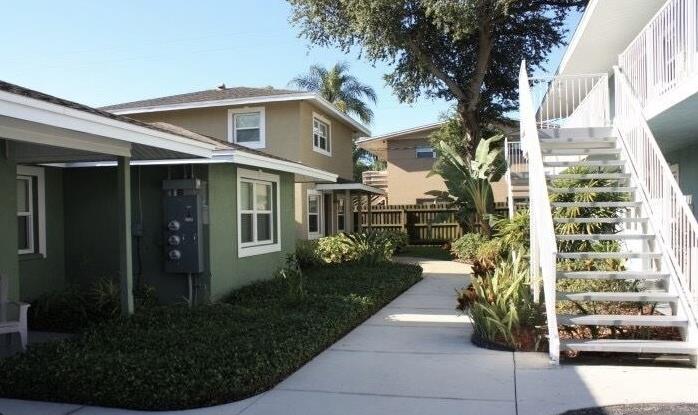
In 2012, I began buying real estate in Western Florida. Four years after the crisis, opportunities were still lying on the floor. Looking back, their scale was extraordinary.
The window ahead resembles the one that opened after 2008. It is less dramatic and less clear-cut, but the trend is similar. Those able to rise above the paralyzing psychology of crisis, focus on deal data and fundamentals, and combine investment capital with execution capability may be able to use the opportunity created by the downturn to grow and thrive.