
The “Sacred Spread” and a Reopening Window
Why the spread between property yield and the cost of capital remains central to conservative underwriting—and why falling valuations may be reopening opportunity.

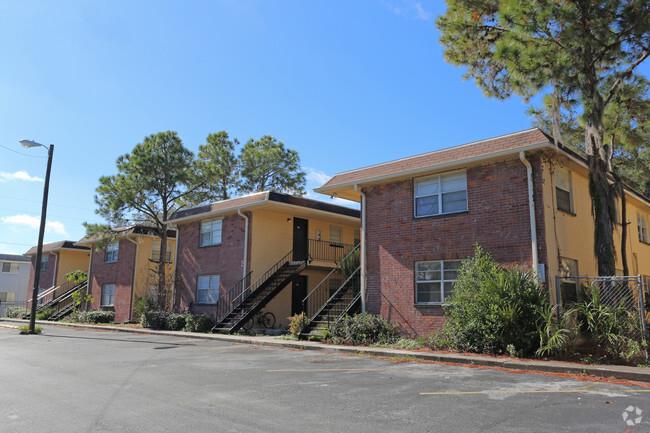
Every sensible person knows that in investing, risk and opportunity are always bound together. Real estate investments, despite being investments in tangible assets, are no exception. When residential property values in Florida fall, most people see risk. Financial analysis, however, highlights a window of opportunity that may be reopening.
There is a quick profitability calculation for a property that everyone in the field knows. Net Operating Income (NOI) divided by the purchase price—or, for conservatives, the total acquisition cost—equals the capitalization rate, or CAP rate. This is essentially the property's yield as a percentage. It is then compared with the cost of capital: the interest rate on the loan. If there is a healthy spread of more than 2% between the cost of capital and the CAP rate, the project is likely to be profitable. It is a back-of-the-envelope calculation: the quick math done on a paper napkin at a restaurant.
For professionals, this is not enough. Every deal must be tested in a comprehensive financial model. That model projects numerous variables over the planned holding period, builds in contingencies such as under-leasing and expected or unexpected repairs, and runs sensitivity analyses.
In recent years, this “sacred spread” between the cost of capital and annual property yield was erased. Some investors bought without it, expecting either a lower future cost of capital or a higher CAP rate through improved revenue and profitability. That approach requires daring and introduces additional risk. Nobody has a crystal ball, and the market contains an enormous number of variables.
For backgammon enthusiasts, it is like leaving pieces open and exposed, gambling that an opponent will not roll the right dice. There is also patient capital, which anticipates initial losses and cash burn based on an analysis that the market will eventually turn, performance will improve, and value will rise. If it works, it can produce an excellent return on equity.
The conservative investor who refuses to surrender the sacred spread will execute fewer deals and surely miss some that later look excellent. In return, that investor mitigates risks that could otherwise spiral out of control.
The window I mentioned in previous posts is emerging as property valuations fall and begin to recreate a spread between NOI yield and the cost of capital.
Our cautious near-term approach is to acquire viable properties—in terms of location, condition, and other fundamentals—at sufficiently low valuations and with financing that survives aggressive sensitivity testing beyond the target property's current, subpar performance.
Whenever such a deal is identified, it must be thoroughly analyzed in a financial model. That requires understanding future capital needs, financing structure, expected insurance costs, property-tax increases, and unexpected market disruptions such as significant under-leasing. In this way, the reasonable risk inherent in every deal can be contained.
On the other side, when the economic cycle turns positive, profitability rises and the deal can perform exceptionally well—or, as the saying goes, a rising tide lifts all boats.
The current crisis in Florida real estate is lowering property values and, as a result, beginning to open a window of opportunity.